Aug 2024
Designing with AI: Speed, Judgment, and Human Taste
A reflection on where AI accelerates design research and generation—and where empathy, aesthetics, and self-reflection still matter.
Over several months, I explored AI through Harari’s Sapiens: A Brief History of Humankind, The Age of AI and Our Future, Professor Hung-Yi Lee’s Introduction to GenAI, NN Group’s Design Taste vs. Technical Skills in the Era of AI, and Tetiana Gulei’s LinkedIn Learning course Using AI in the UX Design Process. These sources led me to reflect on two areas of design work: research and generation.
AI in design research
Expanding a search without adding the same time cost
In competitor analysis, large language models can help broaden an initial search for direct and indirect competitors. For example:
“I am creating a fitness app for professionals aged 24–36 in the Netherlands. Identify ten leading fitness apps in the local market for this audience.”
The output can then be refined for a specific need, such as comparing strengths and weaknesses.
Reconsidering the sequence of research activities
AI can quickly generate many possibilities, which led me to reconsider the order of activities such as personas and interviews. Traditionally, personas are synthesized from interview data, as in my earlier design project. With AI, a team could first generate possible personas, then use stakeholder discussions and user interviews to examine them.
AlphaZero offers a related example: its chess strategies emerged through training rather than direct human instruction. It shows how AI can surface possibilities that established methods may not anticipate.
Drafting and refining interview questions
AI can quickly draft and refine interview questions. Providing structure, context, a role, or examples can help it produce more useful prompts, including icebreakers.
Considerations in research
My main considerations are empathy, data security, accuracy, the time frame of source data, and whether the context is B2B or B2C. I am especially concerned with empathy: sensitive topics and the feelings of interviewees still require human attention.
AI in design generation
Generating storyboard images
I used Adobe Firefly to create two before-and-after images in about 45 minutes. Compared with searching for suitable images or arranging a photo shoot, the process saved time. The details were imperfect—the helmet appears to float above the person’s head—but the images still served their communication purpose.
“A semiconductor company's training center integrating AR into the training process. “
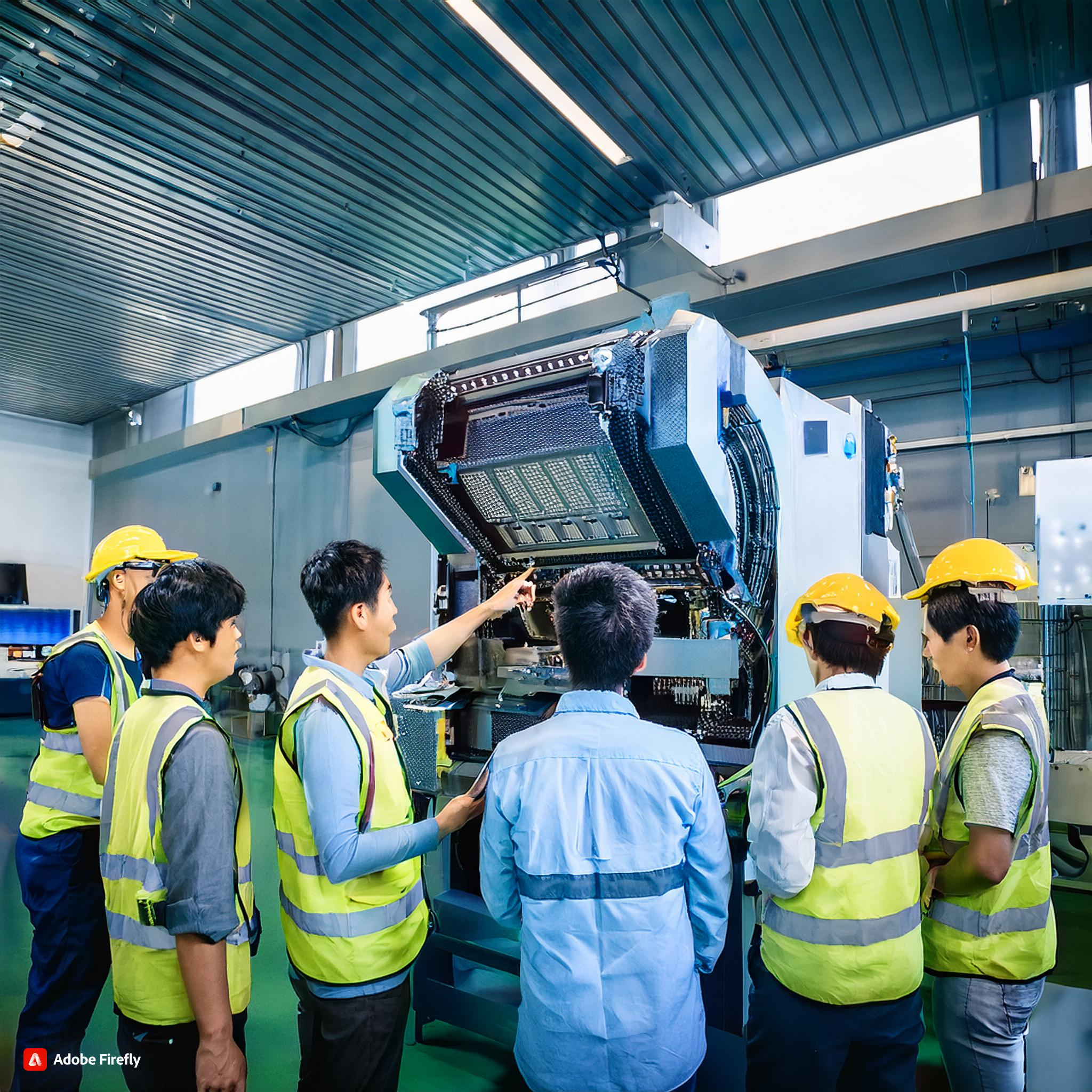
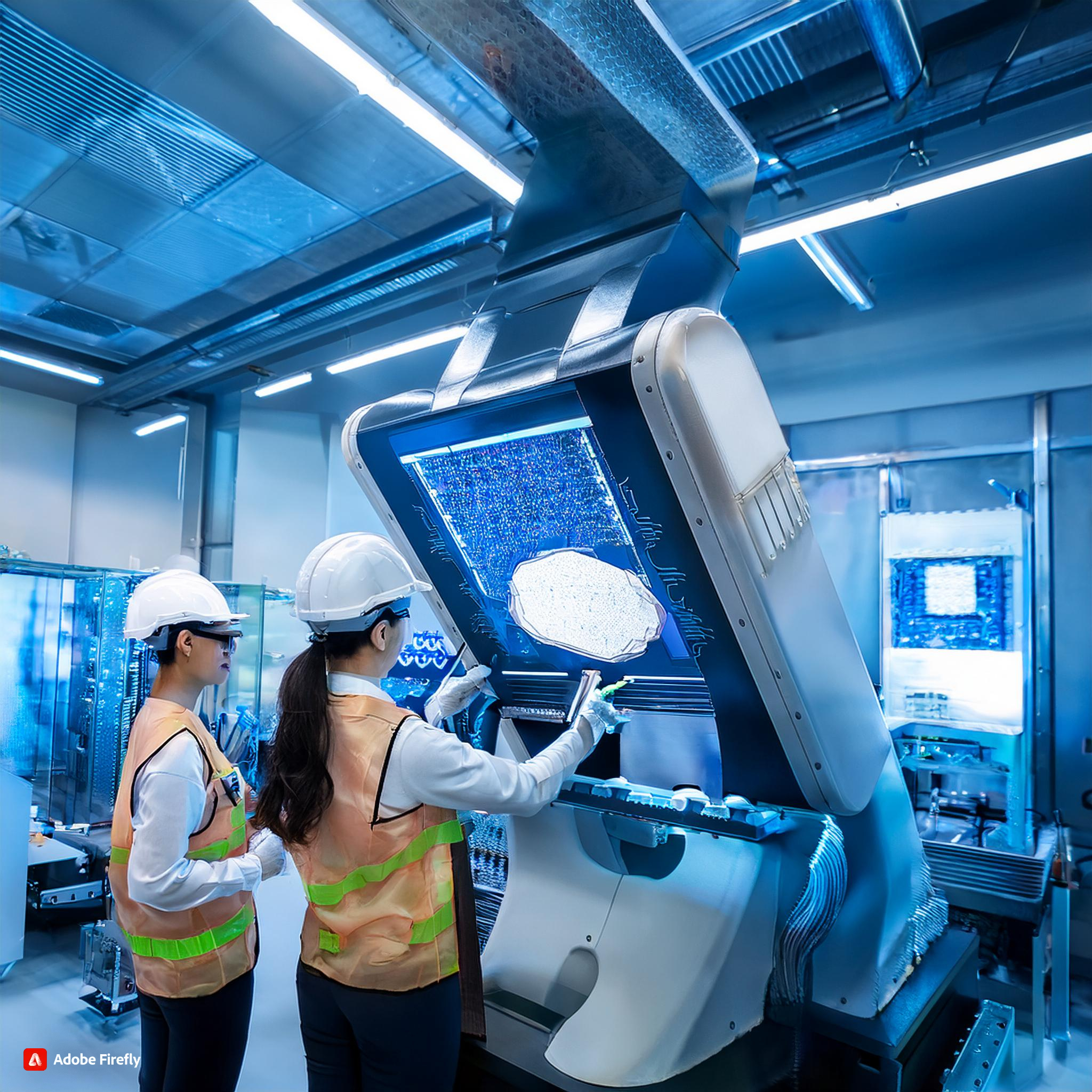
Using the AEIOU framework—Activities, Environments, Interactions, Objects, and Users—to structure the prompt helped me generate images closer to what I needed.
Creating custom avatars and photos
Figma plugins such as Freepik also helped me generate customized avatars and photos for design output.
Objective communication and subjective expression
I find AI most useful for objective images and illustrations, such as scenario diagrams. It is less effective for work grounded in subjective emotion or personal expression. Brand identities, personal logos, calligraphy, and similar work are closely connected to individual experience, observation, imagination, and aesthetics.
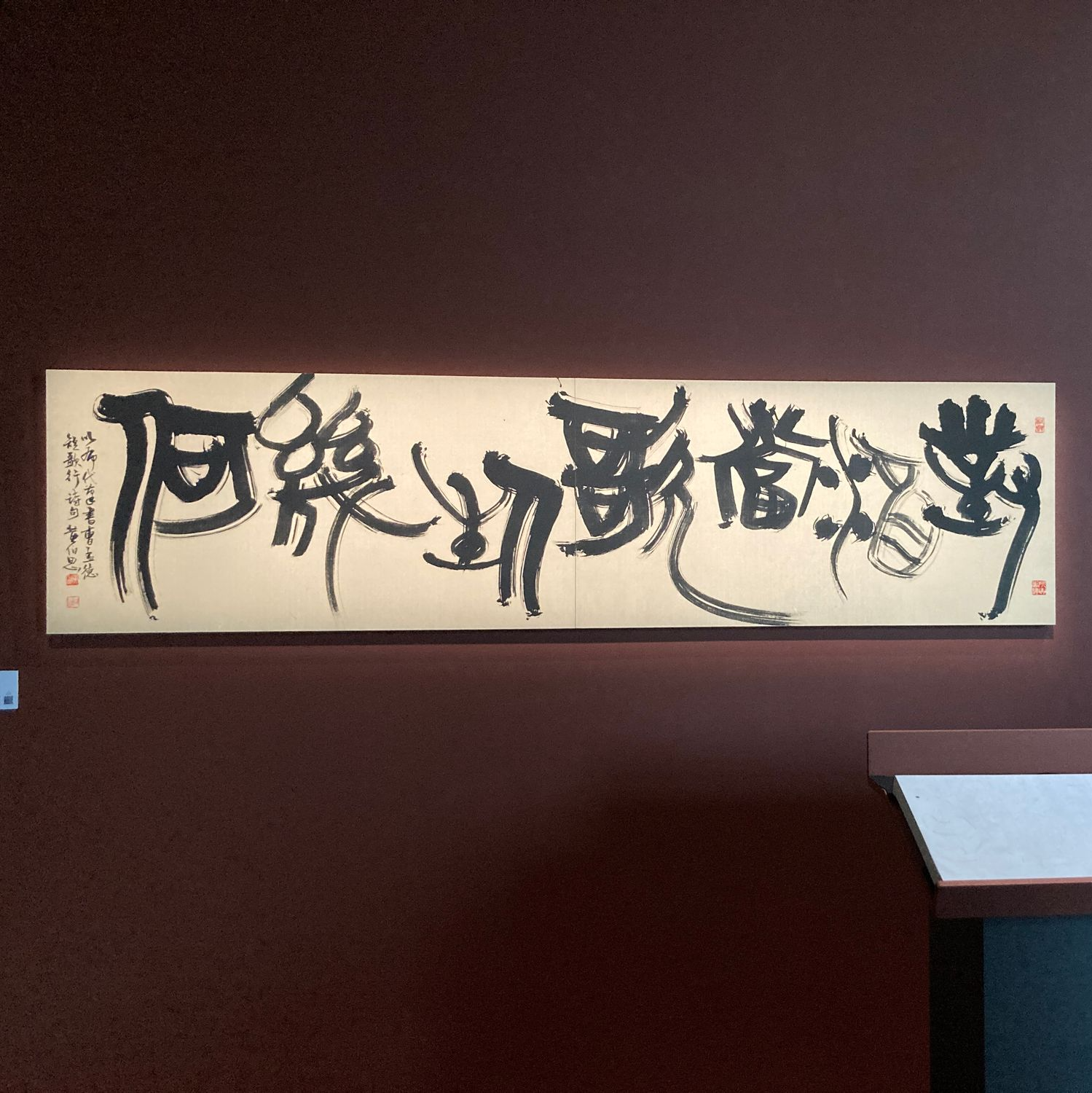
At the Hengshan Calligraphy Art Center, I encountered 黃伯思’s 對酒當歌,人生幾何. The work made me wonder whether AI could reproduce Cao Cao’s experience of his era or imagine a contemporary calligrapher replacing the traditional brush with fabric. This piece was created with fabric rather than written with a brush.
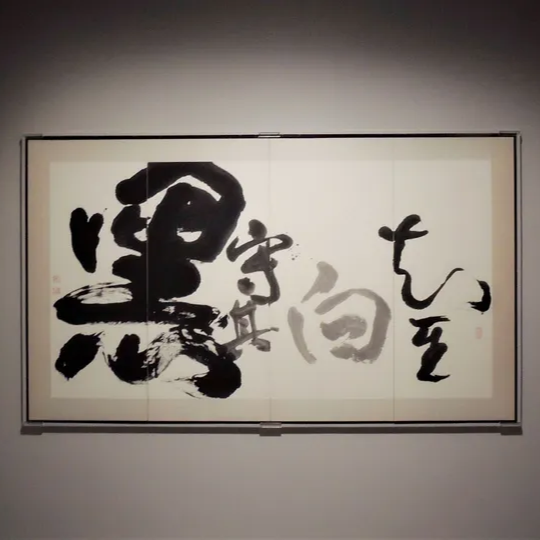
Calligrapher Tong Yang-Tzu’s 知其白守其黑 is another work that resonates with me.
I also continue to find Lindon Leader’s 1994 FedEx logo remarkably clever.

I believe the language-based generation of LLMs still struggles to produce work rooted in this kind of experience and expression.
Reflection
AI can accelerate time-consuming work such as searching for information, organizing material, and generating visual possibilities. At the same time, I believe empathy, aesthetics, and self-reflection remain important parts of a designer’s value, and each requires long-term cultivation.
Naval Ravikant has suggested refreshing our skills every nine months. As AI accelerates the work around us, I want to keep developing both my technical tools and my human abilities.
From a historical standpoint, I view the AI revolution with optimism. Revolutions have always centered around information and energy. The Agricultural Revolution enabled the accumulation of information through settlement. The Industrial Revolution harnessed fossil fuels for energy conversion. The Technology Revolution, driven by computers and the internet, facilitated boundless information transmission. As for the AI Revolution? Turing designed the first computer in 1943, and AI was measured by its ability to mimic human intelligence. However, with advancements in algorithms and computational power, AI now surpasses human rationality, challenging how we create and process information.
I also recommend Professor Hung-Yi Lee’s course for an accessible and humorous introduction to AI. As a non-technical learner, I found the first five lectures especially enjoyable.